
Although it is true that historic preservation in Berkeley is a fairly recent phenomenon, glimmers of interest in the significance of Berkeley’s built environment can be seen as early as 1901 when John Boyd, noticing the swift changes occurring in town, called for the formation of an historical society to preserve photos of Berkeley buildings that were already becoming historic.
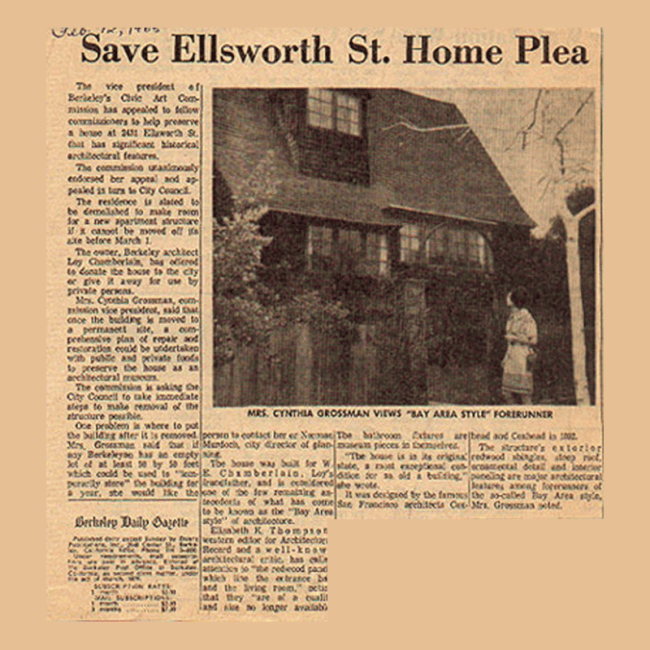
The next decades saw sporadic and unsuccessful attempts to preserve historic homes as museums. In 1949, Elizabeth Kendall Thompson’s Backgrounds & Beginnings section of an exhibition of local architecture at the San Francisco Art Museum gave impetus to research on Bay Region architects. With a growing awareness of the significance of Berkeley’s architecture and the loss of a number of fine examples in the late 1950s and ’60s, the Civic Art Commission and local architectural historians began compiling lists of important structures. In early 1968, efforts to save the Loy House (Ernest Coxhead, 1892) increased public awareness of Berkeley’s architectural heritage and the need to protect it.
In 1965, Urban Care—a non-profit organization dedicated to enhancing the quality of the environment throughout Berkeley—was established. Its stated goals also included the preservation and protection of historical landmarks. Many of the members of Urban Care had expressed an interest in historic preservation, and an architectural heritage committee was envisioned. By late 1967 an effort was made to find a chairman for such a committee. A willing chair was found in Elinor Richey (author of The Ultimate Victorians), who had worked with a cultural heritage group in Chicago. She had resolved to establish a similar group here and was recruiting a committee when approached by Urban Care’s Rosalind Lepawsky. In January 1968, the Architectural Heritage Committee of Urban Care held its first meeting. This was the first meeting of a group that would later evolve into BAHA.
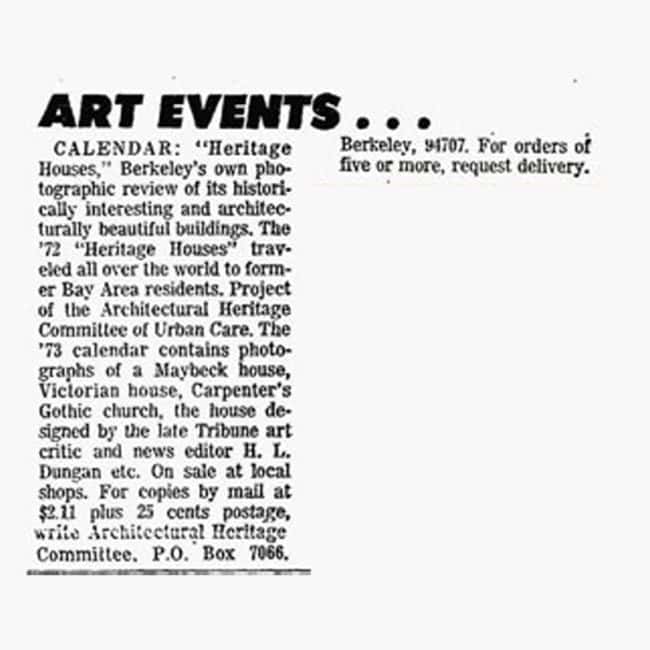
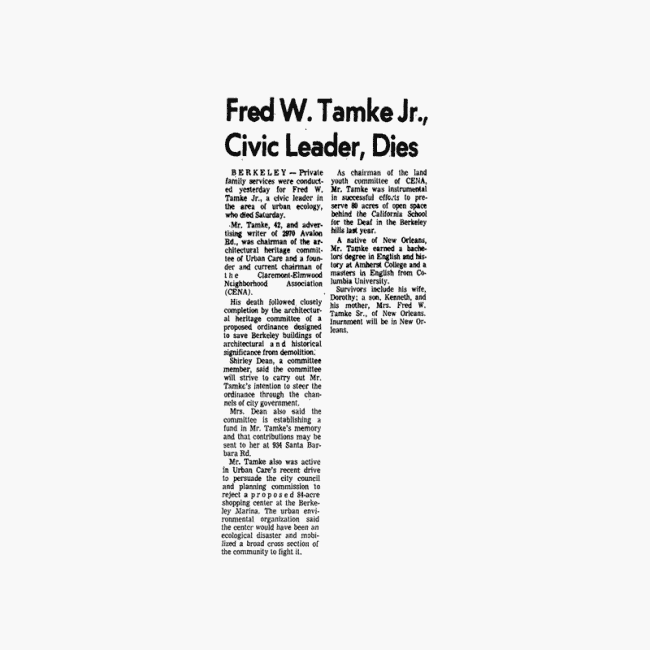
During the next two and a half years the committee studied preservation ordinances from other cities and helped with the Junior League Survey. The custom was to disband in the summer, but in 1970 the committee meetings did not resume in the fall. Elinor Richey, no longer chair, became concerned that the momentum built up by the committee would be lost and appealed to Urban Care director Fred Tamke to reactivate the committee. The major catalyst for reactivating the group was the threat to St. John’s Presbyterian Church (Julia Morgan, 1908), which was brought to their attention by Lesley Emmington in December 1970. The Committee on Architectural Heritage and Urban Beautification, as it was to be known, began again in January 1971 under the dynamic leadership of Fred Tamke and joined by a number of active new members, among them JoAnn Price and Richard Ehrenberger, whose efforts secured Oakland’s Camron-Stanford House from demolition; Shirley Dean, planning commissioner and later city councilor and mayor; attorney Carl Bunch; and Lesley Emmington, whose special dedication made her name synonymous with preservation in Berkeley. The goals were to arouse citizen interest (two long-term BAHA initiatives—the heritage calendar and the newspaper series—were begun in the fall of 1971) and to write and seek the adoption of a preservation ordinance for Berkeley.
During the next two and a half years the committee studied preservation ordinances from other cities and helped with the Junior League Survey. The custom was to disband in the summer, but in 1970 the committee meetings did not resume in the fall. Elinor Richey, no longer chair, became concerned that the momentum built up by the committee would be lost and appealed to Urban Care director Fred Tamke to reactivate the committee. The major catalyst for reactivating the group was the threat to St. John’s Presbyterian Church (Julia Morgan, 1908), which was brought to their attention by Lesley Emmington in December 1970. The Committee on Architectural Heritage and Urban Beautification, as it was to be known, began again in January 1971 under the dynamic leadership of Fred Tamke and joined by a number of active new members, among them JoAnn Price and Richard Ehrenberger, whose efforts secured Oakland’s Camron-Stanford House from demolition; Shirley Dean, planning commissioner and later city councilor and mayor; attorney Carl Bunch; and Lesley Emmington, whose special dedication made her name synonymous with preservation in Berkeley. The goals were to arouse citizen interest (two long-term BAHA initiatives—the heritage calendar and the newspaper series—were begun in the fall of 1971) and to write and seek the adoption of a preservation ordinance for Berkeley.
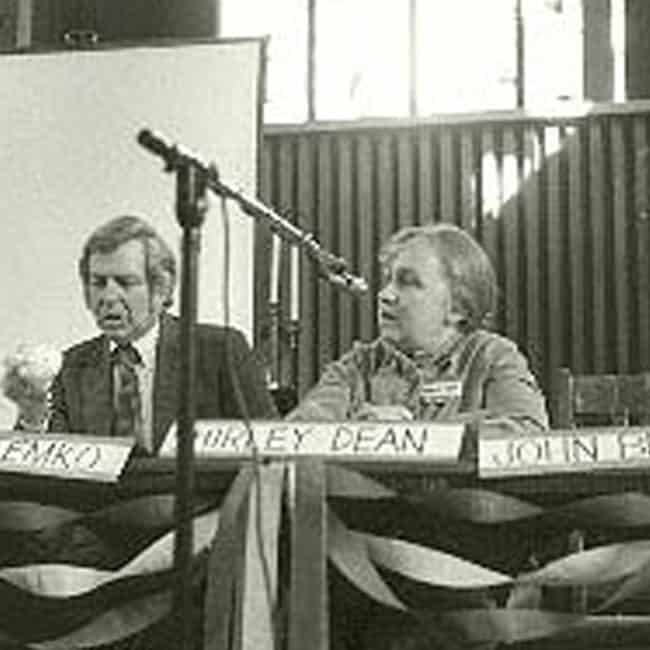
With the hard work of the ordinance behind, and a post office box and logo, the organization once again began its endeavors to promote preservation awareness in the community. In February 1974, an Open Forum on Preservation was held at St. John’s; April brought the first series of the annual neighborhood walking tours (which continued through 1985); and the reception for the authors of Building With Nature at the Hillside Club in November brought together town and gown in a successful and well-attended event that established preservation as a legitimate concern in the community. That year, the committee began to seek dues-paying members, and on 9 December 1974, with close to 90 members, the committee was officially incorporated as The Berkeley Architectural Heritage Association.
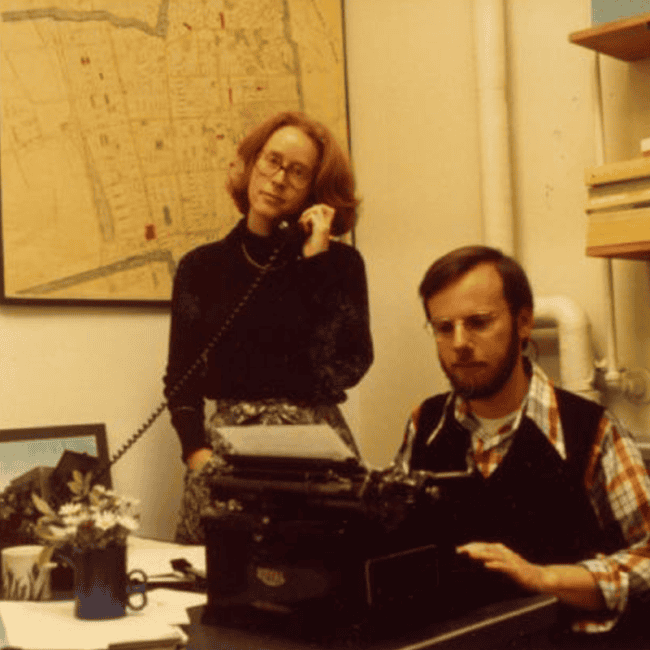
BAHA’s first major project was the Urban Conservation Survey which began as a Bicentennial project involving neighborhood volunteers surveying their own block. This survey became the nucleus of BAHA’s extensive files on Berkeley buildings. To expand the scope and effectiveness of the survey, BAHA applied for and received a matching grant from the State Office of Historic Preservation, and Berkeley became one of the first cities in California to conduct a State Historic Resources Inventory. As an in-kind match from the City, BAHA was given an office at 1844 Addison Street in February 1977. When the survey ended in 1979, BAHA realized that an office was a necessity for community outreach, and so it continued through additional operating grants, and since 1981 has successfully been kept open without outside funding. From a small room in City Hall, BAHA moved to a spacious loft in an old lumberyard; then, courtesy of the Shattuck Hotel, to the Berkeley Conference Center at the Masonic Temple building, 2105 Bancroft Way at Shattuck Ave. (William Wharff, 1905); and eventually to the current location at the McCreary-Greer House.
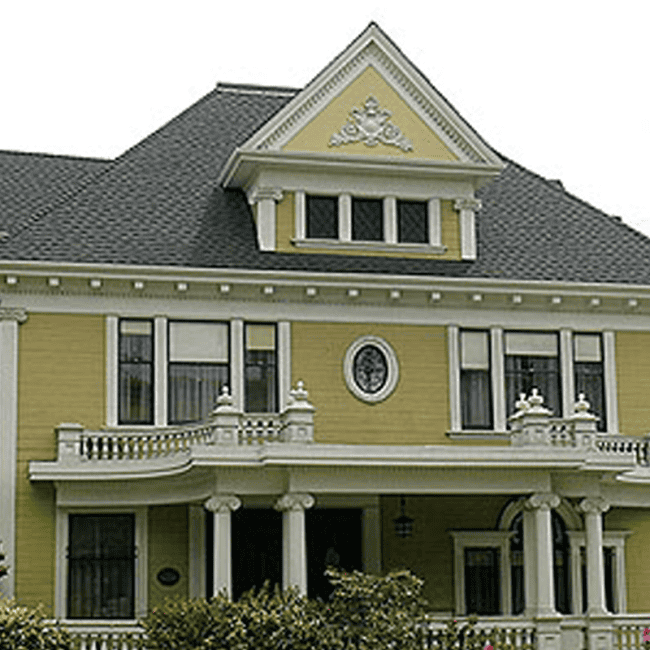
A major defining event in BAHA’s history was the gift of the McCreary-Greer House in the summer of 1986. Ruth Alice Greer, who had known the house all her life and owned it since 1961, gave it to BAHA to ensure its preservation for future generations. BAHA took on new responsibilities with the acceptance of the gift, but also gained greater recognition by operating from our own historic landmark building. McCreary-Greer House (photo: Daniella Thompson, 2004) In the four decades since its incorporation, BAHA has continued to grow and to make its presence felt throughout the community. Our purpose is to educate the community to encourage and secure the preservation of Berkeley’s rich architectural heritage.